
The Lokpal Bill has been referred to the Standing Committee of Parliament on personnel, public grievances, law and justice. In this FAQ, we explain the process of these committees.

The Congress party has strongly refuted government claims that its MPs on the Parliament Standing Committee on Finance supported a fee on high-value UPI payments. Congress leaders, including Gaurav Gogoi and Manish Tewari, stated that the "UPI tax" proposal was not specifically discussed by the committee, accusing the Modi government of diverting attention from public backlash and appeasing US companies. The government, however, cited the committee's report which pressed for a tiered Merchant Discount Rate (MDR) framework.

The Trinamool Congress has lost the chairpersonship of two significant Parliamentary panels following a reconstitution by Rajya Sabha Chairman C P Radhakrishnan and Lok Sabha Speaker Om Birla. This development comes after a split in the TMC, with rebel MPs joining the Nationalist Citizen Party and supporting the NDA. The TMC has strongly criticised the move, alleging that Parliament is being turned into a 'deep, dark chamber' due to their exclusion from committee leadership.

Opposition MPs have voiced strong criticism against the government's new fee on UPI payments exceeding Rs 2,000 to merchants, calling it "anti-people" and expressing widespread "outrage". The issue was raised in a Parliamentary Standing Committee meeting, where concerns were also flagged regarding the methodology of GDP growth calculation and the government's stance on Virtual Digital Assets.

The Indian government has confirmed there will be no rollback of the 0.4 per cent Merchant Discount Rate (MDR) charges on Unified Payments Interface (UPI) transactions exceeding Rs 2,000, effective from October 15. Despite opposition, officials state the decision aims to make the UPI ecosystem self-sustainable and secure, with charges applying only to merchant payments, not person-to-person transactions.

A government bill proposing to widen the remit of the Indian Statistical Institute (ISI) is facing scrutiny from Members of Parliament. Concerns have been raised that the Indian Statistical Institute Bill, 2026, could reduce the premier institute's autonomy. The bill, currently under examination by a Parliamentary Standing Committee on Finance, aims to incorporate ISI as a 'body corporate' to strengthen governance and promote academic excellence, but critics fear increased government control.
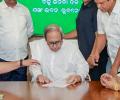
BJD chief Naveen Patnaik has voiced concerns over the Centre's decision to introduce Merchant Discount Rate (MDR) charges on UPI transactions above Rs 2,000 from October 15, urging protection for small traders and common people. This move has sparked a political debate, with the BJP defending the charges as beneficial for digital infrastructure and largely not impacting consumers, while the Congress and traders' associations criticise it as an additional burden.

The fiscal consolidation path and Rs 1 trillion stabilisation fund provide room to absorb mild shocks, but sustained oil-price increases pose risks.

The Indian government has introduced a 0.4% fee on UPI transactions above Rs 2,000 for merchants, effective October 15, sparking strong opposition from political parties and traders. Despite accusations of foreign influence and demands for a rollback, the finance ministry and top functionaries have stated there will be no reversal, citing the need for a self-sustaining digital payments ecosystem.

The National Payments Corporation of India (NPCI) stated that the Merchant Discount Rate (MDR) "is distributed only amongst the UPI ecosystem, to further invest into infrastructure resilience, innovation, cybersecurity (protecting the UPI infrastructure with banks and non-banks) and customer service."

The government is introducing a 0.4% Merchant Discount Rate (MDR) on UPI person-to-merchant payments above Rs 2,000, effective October 15. This move ends the zero-MDR regime, aiming to fund UPI infrastructure and sustainability, as the previous government subsidy was insufficient to cover operational costs. Payments between individuals and most everyday merchant transactions will remain free.
The Indian government has introduced a 0.4% Merchant Discount Rate (MDR) on UPI person-to-merchant (P2M) transactions exceeding Rs 2,000, effective October 15. This move ends nearly six years of fully free UPI payments, though person-to-person (P2P) transfers and small P2M payments remain free. The charges aim to bolster investment in UPI infrastructure, with specific exemptions and caps for essential sectors.

The Indian government has clarified that consumers will not be charged for UPI transactions, and most merchant transactions will also remain free. This comes amidst speculation following an amendment to the Payment and Settlement Systems Act, 2007. Any future merchant discount rate (MDR) would be nominal, threshold-based, and aimed at ensuring UPI's long-term sustainability and infrastructure development.

All services on the income-tax e-filing portal -- both pre-login and post-login -- are expected to be updated by April 1 to reflect the new legal framework.

The first leg of the Budget session concluded with debates over the India-US trade deal and a former army chief's memoir, and will reassemble on March 9.

The Rajya Sabha witnessed a heated debate between the opposition and the government regarding a discussion on the West Asia crisis, with accusations of political maneuvering and failure to uphold the dignity of parliamentary positions.

Officials said the government is keen to conform to the convention of the Union Budget for 2026-2027 being presented on February 1 despite it falling on a Sunday in 2026.

BJP MP and actor Ravi Kishan has been awarded the Sansad Ratna for his outstanding performance in the Lok Sabha, becoming the first actor-turned-politician to receive the honour.

Three laws passed in Parliament could boost central revenues, reshape GST cess flows, shift MGNREGA costs to states and create new budget headroom ahead of the 2026-2027 Union Budget, points out A K Bhattacharya.
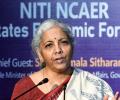
'Each state is unique, but when it comes to finance, the fundamentals cannot be different.'

The increased numbers of the Opposition bloc would mean that their MPs are likely to head several more panels than the four that they did by the end of the term of the 17th Lok Sabha.

The Indian government addressed opposition concerns regarding the West Asia crisis in an all-party meeting, outlining its strategy for ensuring the security of the Indian diaspora, fulfilling energy needs, and maintaining diplomatic relations with key partners. The government also dismissed Pakistan's reported mediation efforts.

With less than six months left for this financial year and poor response from applicants, launching the scheme this year is unlikely.
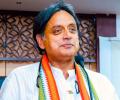
The panel will likely play an important role as the Personal Data Protection Bill gets tabled in Parliament.

Students at Tezpur University in Assam have shut down the institution, protesting against Vice Chancellor Shambhu Nath Singh over allegations of corruption and financial irregularities. The shutdown has led to the cancellation of end-term examinations and has garnered support from teachers and non-teaching staff.
The Lok Pal Bill has been referred to the standing committee of Parliament on personnel, public grievances, law and hustice. In this FAQ, MR Madhavan explains the process of these committees.

The Micro Finance Institutions (Development and Regulation) Bill, 2012, is currently being scrutinised by a Parliamentary Standing Committee.

Finance Minister Nirmala Sitharaman on Saturday said she is likely to introduce the new income tax bill, which will replace the six-decade-old I-T Act, in the Lok Sabha in the coming week.

Taking a leaf from the US, Canada and the UK, where students and research scholars get to work with Parliamentary panels, Lok Sabha Speaker Sumitra Mahajan is pushing for induction of interns in the Parliamentary standing committees.

As the debate on revealing names of those who had stashed money abroad was hotting up, a Parliamentary panel grilled finance ministry officials on why the confidentiality clause was put in tax treaties in the first place.
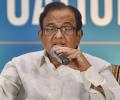
Rajya Sabha chairman Jagdeep Dhankhar on Tuesday nominated former home minister and Congress member P Chidambaram to the department-related parliamentary standing committee on home affairs.

India will benefit hugely if the representation of women in Parliament is increased to a just level.

The famous 'tareekh pe tareekh' dialogue from the Hindi movie Damini captures where we are now.
As chairman of the parliamentary standing committee on finance, former finance minister, Yashwant Sinha, says he is committed to expediting the legislative work associated with important Bills, including the direct taxes code (DTC) and Goods and Servies Tax.
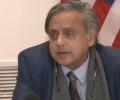
Congress MP Shashi Tharoor on Saturday (local time) highlighted how India responded in a measured and calibrated manner towards terror bases and headquarters in Pakistan, following the dastardly Pahalgam terror attack in which 26 people were killed.
Parliament on Monday approved the Industrial Development Bank of India Repeal Bill to enable its conversion into a universal bank

Opposition parties have not been given the chairmanship of any of the four key parliamentary panels including the committee on home affairs and information technology, which were with the Congress, in the latest rejig announced on Tuesday.

Buch, under a cloud over allegations of conflict of interest levelled by United States-based short-seller Hindenburg, was asked to appear before the PAC, which is reviewing the performance of the market regulator.
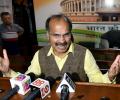
Congress leader in Lok Sabha Adhir Ranjan Chowdhury and some other MPs suspended from Parliament will not be able to attend the meetings of parliamentary committees of which they are a member or chairperson till their suspension is revoked.

First Rajya Sabha approved the Rs 45 lakh-crore spending proposed in the Budget, followed by the nod to the Finance Bill that contains tax proposals.
